
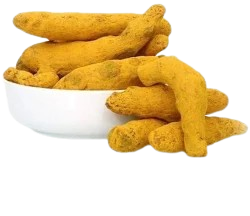
India stands as the undisputed leader in the global turmeric market, supplying the world with this golden spice renowned for its culinary versatility and powerful medicinal properties. As experienced manufacturers and exporters, we understand the dynamics that make Indian turmeric the preferred choice for importers worldwide.
India’s Market Dominance
India commands approximately 66% of the world’s turmeric trade, with exports reaching around 176,000 metric tons in the recent fiscal year. This remarkable market share reflects decades of agricultural expertise, favourable growing conditions and a deep cultural connection to this valuable spice. Maharashtra leads in export value, with significant contributions from West Bengal and Kerala, creating a robust supply network across the country.
Global Demand and Key Markets
India is the world’s largest producer and exporter of turmeric, supplying over 60% of global trade in volume. Key advantages for new exporters include:
High global demand: Turmeric is used in cooking, traditional medicine (Ayurveda), and modern health products (curcumin supplements, skincare) in the US, EU, Middle East, and Southeast Asia.
Government support: Schemes from APEDA, Spices Board, and DGFT help exporters with quality certification, market promotion, and logistics.
Types of Turmeric You Can Export
New exporters can choose from several forms, each with different value and complexity:
1. Raw turmeric (fresh or dried rhizomes)
Requires proper drying and storage to avoid mold and high moisture.
2. Turmeric powder (ground haldi)
Higher demand in retail and food processing; popular in the US, EU, and Middle East.
Must be finely ground, free from adulteration (no artificial colors), and packed hygienically.
3. Value‑added products
Turmeric extract (high curcumin), capsules, teas, skincare products, etc.
to extracts.
Step 1: Legal Setup & Registrations
Business registration
Register as a proprietorship, partnership, or private limited company with the Ministry of Corporate Affairs.
Import Export Code (IEC)
Apply for an IEC from the Directorate General of Foreign Trade (DGFT); this is mandatory for any export from India.
GST registration
Get a GSTIN to comply with Indian tax laws and claim export benefits.
APEDA registration
Register with the Agricultural and Processed Food Products Export Development Authority (APEDA) for agricultural products like turmeric.
Spices Board / CRES certificate
For turmeric, obtain a Certificate of Registration and Export Eligibility from the Spices Board of India (CRES).
FSSAI license
Source from major turmeric belts
Maharashtra (Kolhapur, Sangli)
Telangana (Nizamabad, Warangal)
Tamil Nadu (Erode, Salem)
Karnataka (Belagavi, Chitradurga)
Key quality parameters
Moisture content: below 10% (to prevent mold).
Curcumin content: 3–6% for powder; higher for extracts (often 95%+).
Color: bright yellow to orange; avoid dull or dark rhizomes.
Cleanliness: free from stones, dirt, and foreign matter.
Testing & certification
Send samples to NABL‑accredited labs for moisture, curcumin, pesticides, aflatoxins, and heavy metals.
Maintain batch records for traceability.
Step 3: Packaging & Labeling
Proper packaging protects quality and meets import regulations.
Packaging options
Dried turmeric: 25–50 kg jute bags or HDPE bags with inner polythene.
Turmeric powder: 1–5 kg food‑grade plastic pouches or drums (for bulk), with moisture barrier.
Extracts: sealed drums or foil pouches in cartons.
Labeling requirements
Net weight
Batch number and manufacturing/expiry date
Name and address of exporter
Storage instructions (cool, dry place)
Step 4: Export Documentation
A complete set of documents is essential for customs clearance and buyer trust.[2][4]
Mandatory documents:
Commercial Invoice (with value, quantity, HS code)
Packing List (details of packages, weight, dimensions)
Bill of Lading (for sea) or Airway Bill (for air)
Certificate of Origin (often required for duty benefits)
Phytosanitary Certificate (issued by Plant Quarantine Authority)
Insurance Certificate (for CIF shipments)
Additional documents (as needed):
APEDA/Spices Board certificate
FSSAI certificate (for food products)
Lab test reports (curcumin, pesticides, aflatoxins)
Step 5: Choosing Target Markets
Different markets have different preferences and regulations.
USA & Canada
High demand for turmeric powder and extracts in health stores and online.
Strict FDA rules on pesticides, aflatoxins, and labeling; organic products command premium prices.
European Union
Very strict on pesticide residues, heavy metals, and aflatoxins.
Buyers prefer organic, fair‑trade, and sustainably sourced turmeric.
Middle East (UAE, Saudi Arabia, Oman)
Strong demand for raw turmeric and powder in local markets and restaurants.
Southeast Asia (Malaysia, Singapore, Indonesia)
Growing demand in food and cosmetics; good for value‑added products.
Africa & CIS countries
Price‑sensitive markets; good for bulk raw turmeric at competitive rates.
Step 6: Logistics & Shipping
Choosing the right logistics partner is crucial for cost and reliability.
Mode of transport
Key Indian ports for turmeric export
Mundra, Kandla (Gujarat)
JNPT (Mumbai)
Chennai, Tuticorin (Tamil Nadu)
Visakhapatnam (Andhra Pradesh)
Work with a reliable partner
Hire a freight forwarder or CHA (Customs House Agent) who understands spice exports. They handle customs clearance, documentation, and coordination with shipping lines.
Shipping terms (Incoterms)
FOB (Free on Board): Buyer pays freight and insurance; exporter’s responsibility ends at the port.
CIF (Cost, Insurance, Freight): Exporter arranges and pays for freight and insurance.
Step 7: Finding Buyers & Marketing
A new exporter needs a clear strategy to find and retain buyers.
Online platform
B2B marketplaces: IndiaMART, TradeIndia, Alibaba, ExportHub.
Amazon Global Selling (for branded turmeric powder or extracts).
APEDA’s e‑catalogue and buyer–seller meets.
Offline methods
Participate in APEDA/Spices Board‑organized buyer–seller meets in India.
Direct outreach
Identify importers, distributors, and food manufacturers in target countries.
Send professional product catalogues, lab reports, and samples.
Branding & differentiation
Highlight quality (high curcumin, low moisture), certifications (organic, FSSAI), and traceability.
Offer consistent supply, good packaging, and reliable service to build long‑term relationships.
Step 8: Common Challenges & How to Overcome Them
New exporters often face these hurdles; being prepared helps avoid losses.
Quality rejections at destination
Cause: High moisture, aflatoxins, pesticide residues, or adulteration.
Solution: Test every batch in a reputed lab and maintain strict quality control at sourcing and packing.
Price fluctuations
Solution: Hedge by fixing prices with buyers for a few months and maintain buffer stock.
Stringent import regulations (EU, USA)
These markets frequently tighten limits on contaminants.
Solution: Work with a good lab, follow GAP (Good Agricultural Practices), and keep updated on regulation changes.
Logistics delays and high freight costs
Solution: Book containers/air space early, use multiple logistics partners, and plan shipments in advance.
Competition from other countries
Solution: Focus on India’s reputation for quality, offer better service, and move into value‑added products.
Step 9: Financial & Operational Tips
To run a profitable turmeric export business:
Pricing strategy
Calculate all costs: sourcing, processing, packaging, testing, logistics, documentation, and overheads.
Add a reasonable margin (15–30%) and quote in USD/EUR; avoid under‑pricing to win orders.
Payment terms
Prefer advance payment or LC (Letter of Credit) for new buyers.
For trusted buyers, consider DP (Documents against Payment) or DA (Documents against Acceptance).
Working capital
Record keeping
Maintain records of invoices, shipments, lab reports, and buyer communications for audits and future reference.
Step 10: Scaling Up & Adding Value
Once the basic export is running smoothly, consider:
Processing unit
Set up or tie up with a unit for cleaning, drying, grinding, and packing to control quality and reduce costs.
Value‑added products
Turmeric extract (curcumin), capsules, teas, skincare, or ready‑to‑use blends.
These products fetch much higher prices and reduce dependence on raw commodity prices.
Certifications
Organic, Fair Trade, ISO, HACCP, or Kosher/ Halal certifications can open premium markets and justify higher prices.
Pingback: Elementor #2543 - koushalya
great work and valid information thank you